

When we see bathrooms in glossy magazines or on social media, they often look like vast, minimalist sanctuaries. Free-standing baths sit elegantly in the centre of the room, with plenty of space to admire their curves, while large walk-in showers fade into the distance. Everything feels calm, open and effortlessly stylish.
But for most of us, the reality is very different.
In many modern homes, bathrooms are designed to be compact, prioritising practicality over space. While this makes sense from a layout perspective, it can easily make a small bathroom feel cramped, dark, or closed in – especially if a few common design mistakes slip in along the way.
The good news? With the right design choices, even the smallest bathroom can feel lighter, brighter and more spacious. In this guide, we’ll share five practical design tips for small bathrooms to help you make the most of your space and create a room that feels as airy and inviting as possible.
Bathroom Decoration – Keep It Light, Keep It Reflective

The largest surface area in any bathroom is the wall so your choice of decoration here will have the biggest visual impact and the biggest influence on how light the room feels.
Light-coloured tiles the way to go here. There is no need to use plain white but this is obviously an option. A small amount of colour or pattern, such as a light marble effect, is perfect and will prevent the design from looking too “clinical”.
Ceilings need to be plain white – full stop. Any other colour or design will just catch the eye and have the effect of making the ceiling appear lower than it actually is. Although gloss finishes reflect more light they also reflect other colours and will again be a detraction. So matt white is best. There are matt white ceiling panels that fit the bill and will not need re-painting or indeed any maintenance at all.
Floors can afford to be a little darker in the overall colour scheme for your room but if you are opting for a very dark colour you could try off-setting this by covering an area of the floor with a lighter-coloured bathroom rug.
The largest surface area in any bathroom is the wall, so your choice of wall decoration will have the biggest impact on how the space looks and feels. In a small bathroom, the right finishes can help maximise light and prevent the room from feeling closed-in.
Light-coloured tiles or bathroom wall panels are ideal. While plain white is a classic option, it isn’t the only choice. Soft tones or subtle patterns—such as a pale marble effect—add visual interest without overwhelming the space or making the design feel too clinical.
Ceilings should always be plain white. Dark colours or busy designs draw the eye upward and can make the ceiling appear lower than it really is, which is the last thing a small bathroom needs. Although gloss finishes reflect more light, they can also bounce colour around the room and become visually distracting. A matt white finish works best. Matt white ceiling panels are a practical option, offering a clean look with minimal maintenance and no need for repainting.
Flooring gives you a little more freedom. Slightly darker floor tiles can help ground the overall design, but very dark colours should be used with care. If you do choose a darker floor, balance it with a lighter-coloured bathroom rug to soften the look and keep the space feeling bright.
Bathroom Mirrors – The Bigger The Better
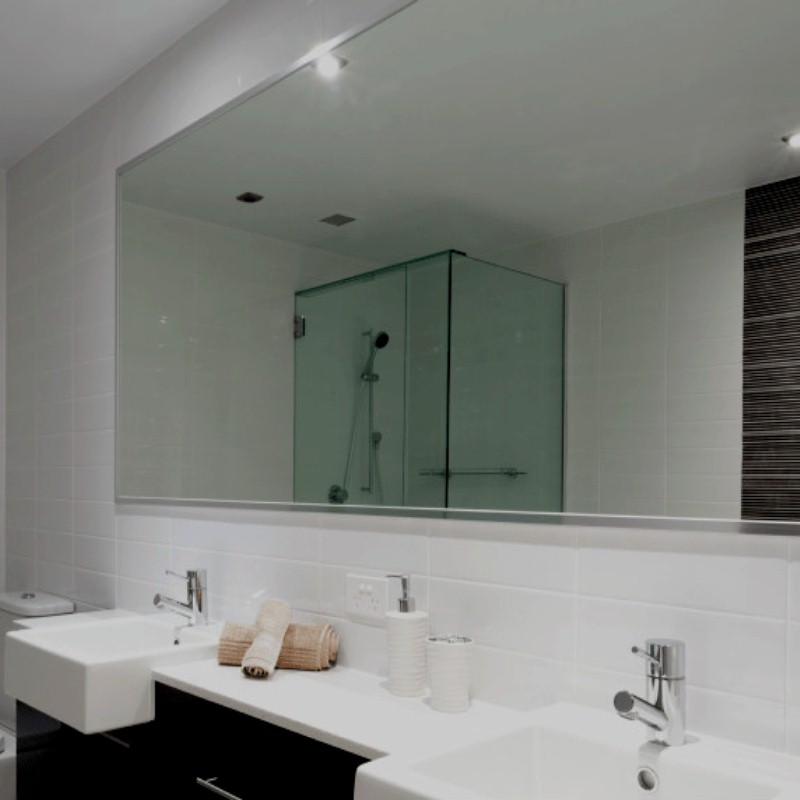
Of all the design tricks you can use in a small bathroom, installing a large mirror will have the greatest visual impact. Mirrors reflect both light and space, instantly making the room feel brighter and more open.
Where possible, fit a mirror that spans the full width of the wall behind the basin. This creates a strong sense of depth and can dramatically increase the feeling of space. When it comes to bathroom mirrors, size really does matter—so choose the largest mirror your layout will allow.
A well-proportioned mirror can trick the eye into thinking the room is almost twice its actual size. In most cases, mirrors are positioned above the basin or vanity unit, but this isn’t always possible. The ideal placement will depend on the shape of the room and the overall bathroom layout.
If wall space is limited, a large mirrored bathroom cabinet is an excellent alternative. Although it projects slightly from the wall, it provides valuable storage and helps reduce visual clutter. As long as the cabinet is generously sized, it will still reflect plenty of light. This will contribute to the illusion of a more spacious bathroom.
The Bathroom Suite: Any Colour You Want – As Long As It’s White

You may not have as much choice as you once did – most bathroom suites are white these days – but that actually works in your favour. The more white you use in a small bathroom, the lighter and more spacious it will feel.
White basins and baths help reflect light and keep the overall design feeling clean and fresh. They also have a practical advantage: soap residue and water marks are far less noticeable than on darker or glass finishes. With darker-coloured basins, you may find yourself wiping them down after every single use.
When space is limited, it’s worth looking beyond standard bathroom fittings. Many products designed for cloakrooms work perfectly well in small bathrooms. Corner toilets, wall-hung basins and compact vanity units can all help free up valuable floor space while remaining fully functional. A local bathroom showroom can offer expert advice and help you find fittings that are small, practical and well-proportioned.
Not all space-saving options are as efficient as they first appear. Corner baths, for example, often take up more room overall while having a shorter bathing space than a straight bath.
If you’re considering a free-standing bath, plan very carefully. These designs need clear space around them to look their best, which can quickly eat into a small bathroom layout. Just because something physically fits into the room doesn’t mean it works from a design or usability point of view.
Add Some Storage To The Room
Every bathroom needs space for soaps, shampoos, toiletries and cleaning products. In a small bathroom, however, leaving these items on display can quickly make the room feel cluttered and cramped. The key is to add smart bathroom storage that keeps everyday essentials out of sight.
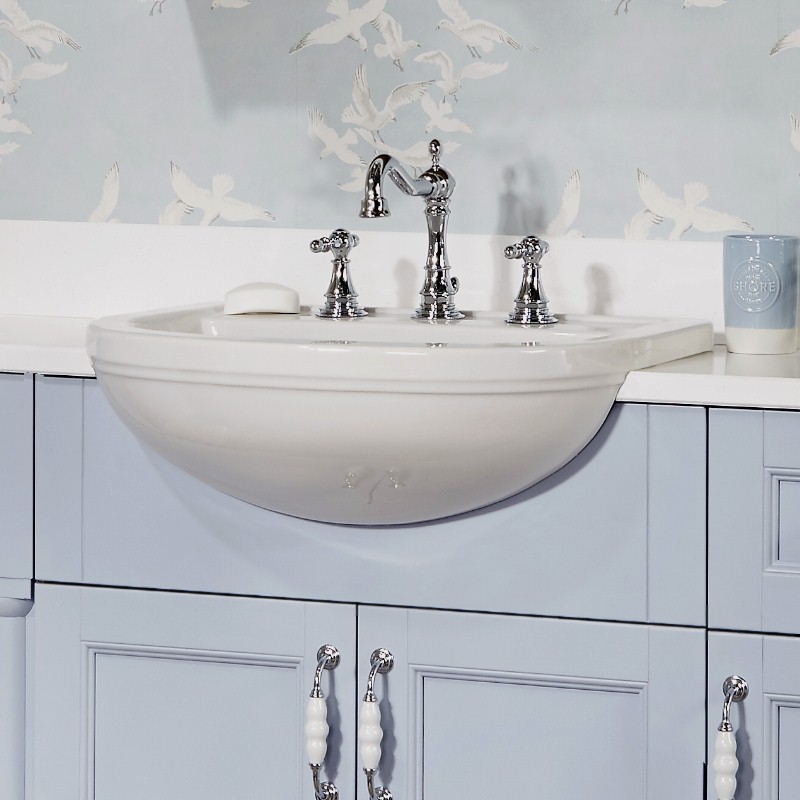
A semi-recessed vanity basin is an excellent option. It offers useful storage while taking up less space than a full-depth vanity unit. The basin itself provides a similar washing area to a standard pedestal basin, but unlike a basin-and-pedestal setup, it also gives you valuable storage underneath. In a small bathroom, this makes a huge difference, as visible clutter can quickly spoil the overall look of the room.
Vanity units are positioned low down, meaning they sit below your main line of sight. This helps preserve the feeling of openness while still adding practical storage where it’s needed most.
If space allows, additional cupboards can be added to the vanity unit to increase storage even further without compromising the overall design.
WC units are another clever storage solution. They conceal pipework and fully enclose the cistern, creating a cleaner, more streamlined appearance while also offering extra hidden storage.
For more inspiration, see our article on bathroom storage ideas.
Bathroom Lighting

Good bathroom lighting is essential in a small space, as it can dramatically affect how open and bright the room feels. Downlighters are a popular choice. They allow light to be evenly distributed across the entire bathroom.
It’s important to choose fittings that meet the correct safety standards, as different areas of the bathroom require different IP ratings. If in doubt, selecting lights that meet the strictest rating throughout the room removes any uncertainty and ensures compliance.
If your bathroom has a centrally mounted ceiling light, fit the highest-output bulb the unit allows. This will help maximise overall brightness. Where adjustable or manoeuvrable downlights are used, aim them towards key areas – particularly the wash hand basin -where good task lighting is most important.
Additional lighting around the basin is highly recommended for activities such as shaving or applying makeup. Illuminated bathroom mirrors and mirrored cabinets are a great solution, providing focused light exactly where it’s needed. Positioning lights near or above a mirror also helps amplify their effect, as reflected light makes the space feel brighter and more spacious.
Bathroom Windows
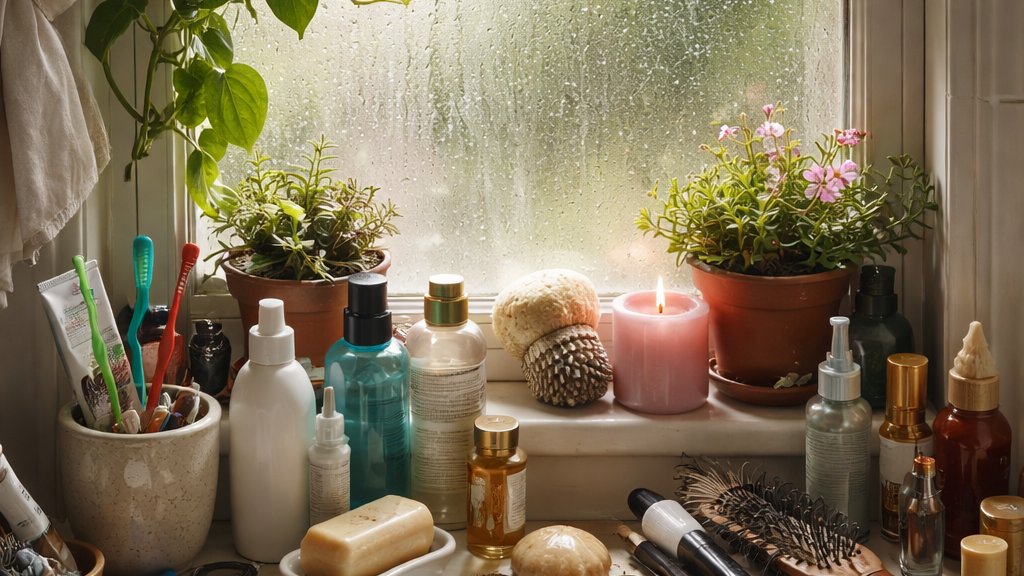
Keeping window sills clear of clutter allows the maximum amount of natural light into the room. In fact, clutter should be avoided wherever possible, as clear surfaces help a small bathroom feel more open and spacious.
If you’re installing a roller blind, choose one with a straight bottom edge rather than a scalloped design. This allows the blind to be rolled fully out of the way, letting in as much daylight as possible when privacy isn’t required.
Clear glass helps a bathroom feel brighter and more open, but privacy is an important consideration. In rural locations, clear glass may be perfectly acceptable. In most suburban or urban settings, however, obscured or frosted glass is usually essential to maintain privacy while still allowing plenty of light into the room.
If you’re designing the bathroom from scratch and have control over window size, aim for a sensible balance. A window that’s too small will limit natural light, while an oversized window can reduce valuable wall space needed for storage, mirrors or fittings.
Designing a small bathroom doesn’t mean compromising on style or comfort.
By keeping surfaces light and reflective, choosing the right mirrors and fittings, adding smart storage, and maximising both lighting and natural light, even the most compact bathroom can feel bright, open and welcoming.
With careful planning and a few well-considered design choices, you can make the most of your space and create a small bathroom that looks bigger, works better and feels great to use every day.


